How to Landscape for Texas Heat and Drought
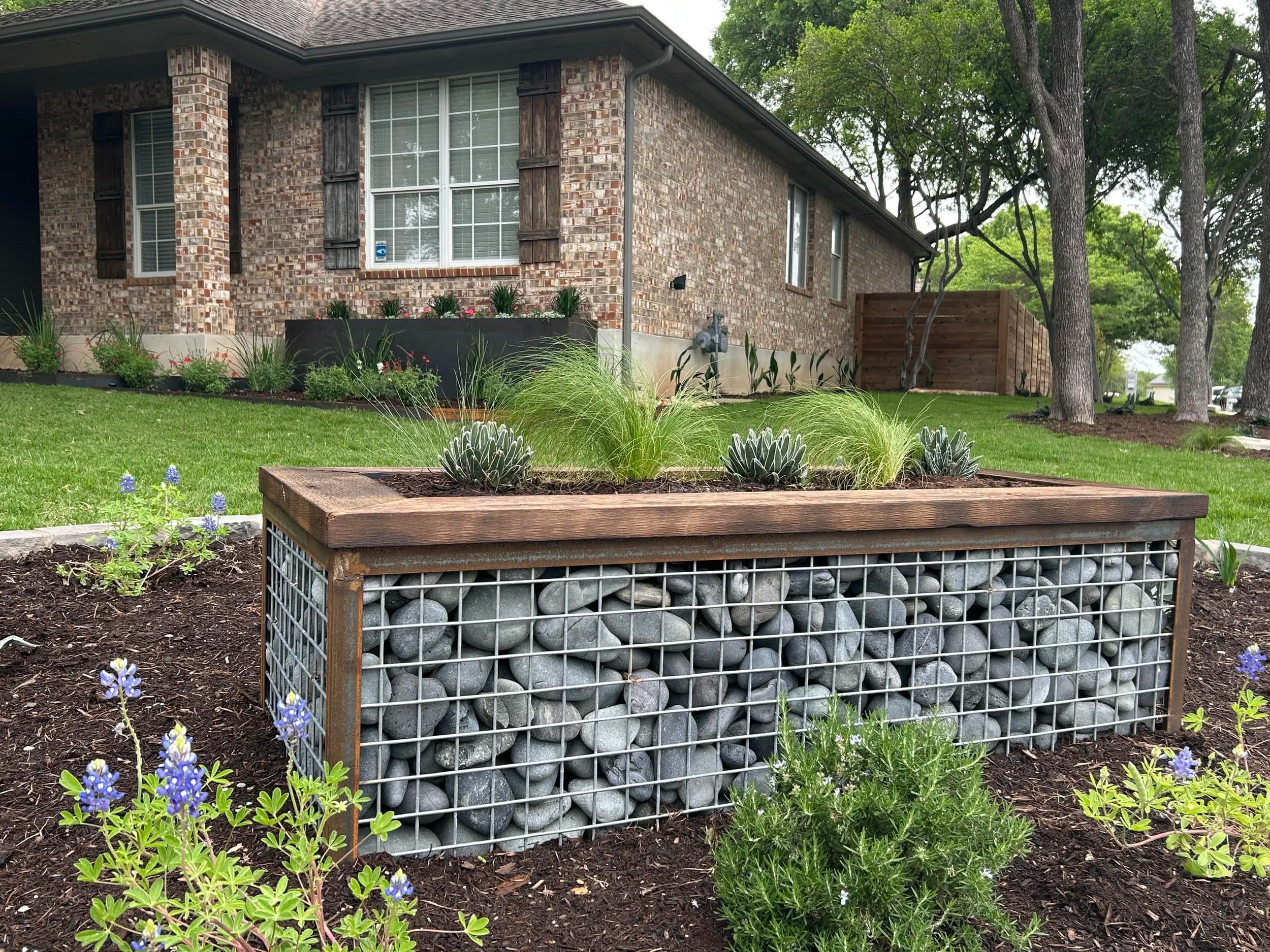

Texas heat and drought aren't occasional challenges, they're defining features of our climate that demand landscape design built around resilience, not hope. After 15+ years installing landscapes across Austin and Central Texas, I've learned the hard way that conventional landscaping approaches simply fail when August hits 105°F for three straight weeks and your last meaningful rain was in April.
This guide compiles the proven strategies we use at Austin Creative Landscaping to create outdoor spaces that don't just survive Texas heat and drought, they thrive through it, maintaining beauty and function while using minimal water and requiring minimal intervention.
Understanding Texas Heat and Drought (The Real Numbers)
Austin sits in a semi-arid climate zone with characteristics that make conventional landscape design nearly impossible:
- Summer heat: 90+ consecutive days over 100°F during drought years (2011 record: 90 days)
- Urban heat island: Pavement and buildings push temps 5–10°F higher than surrounding Hill Country
- Flash drought cycles: Weeks or months without rain during peak growing season
- Extreme variability: Annual rainfall ranges from 13 inches (2011 drought) to 52 inches (2007 floods)
- Soil challenges: Caliche limestone with pH 7.5–8.5 that locks out nutrients and either drains too fast (sand) or holds water in anaerobic puddles (clay)
The 2011 drought was a wake-up call for Central Texas landscaping. Billions of dollars in landscape damage, entire plantings lost, irrigation systems running 24/7 and still failing, St. Augustine lawns dead despite daily watering. The landscapes that survived? Those designed from the start to handle these exact conditions.
Core Strategies for Heat and Drought Resilience
1. Choose the Right Plants (This Is 80% of the Battle)
You cannot irrigate your way out of bad plant selection. A Bradford Pear will struggle in Austin no matter how much water you give it. A Texas Live Oak will thrive with zero supplemental irrigation once established.
Focus on native and adaptive species that have evolved in Texas conditions for millennia. These plants have:
- Deep taproots that access groundwater during drought
- Small, waxy, or silver leaves that reflect heat and minimize water loss
- Dormancy mechanisms that let them shut down during extreme stress and recover when conditions improve
- Natural pest and disease resistance (no weekly spraying needed)
Our most reliable heat and drought performers: Texas Live Oak, Cedar Elm, Desert Willow, Texas Sage, Flame Acanthus, Salvia greggii, Mexican Feathergrass, Gulf Muhly, and Turk's Cap. See our complete low-water plant guide for detailed recommendations.
2. Build Soil That Holds Water (But Drains Excess)
Austin's native soils range from pure sand (drains immediately, holds no moisture) to solid clay (holds water in anaerobic puddles that kill roots). Neither is ideal.
Soil amendment is the second-most important factor (after plant selection) in drought performance. We amend all planting beds with 3–4 inches of quality compost tilled into the top 12 inches. This:
- Increases water retention in sandy soils
- Improves drainage in clay soils
- Adds organic matter that feeds soil microbes
- Creates pore space for roots to penetrate deeply
- Buffers pH swings
Better soil structure = deeper roots = plants that can tap groundwater reserves during extended drought. This investment pays dividends for decades.
3. Design for Shade (Reduce Heat Island Effect)
Strategic shade tree placement can reduce ground temperatures by 20–30°F and cut irrigation needs by 30–50%. Proper landscape design maps out shade patterns and places trees where they'll protect the most heat-sensitive areas:
- West-facing exposures: Afternoon sun is brutal, prioritize shade here
- Hardscape edges: Pavement, concrete, stone all radiate stored heat, shade these areas first
- HVAC equipment: Shading your AC unit can improve efficiency by 10–15%
- Outdoor living spaces: Patios and decks need overhead shade to be usable in summer
Native shade trees like Texas Live Oak, Cedar Elm, and Mexican Sycamore provide dense summer shade while allowing winter sun through their semi-deciduous canopies. Plant them 15–20 feet from foundations (not closer, roots will find moisture under your slab).
4. Mulch Everything (The Single Cheapest Investment)
A 3–4 inch layer of shredded hardwood mulch or decomposed granite over planting beds is the highest-ROI investment you can make in drought resilience. Proper mulching:
- Reduces evaporation by 70%: Keeps soil moisture available to roots instead of evaporating into 100°F air
- Moderates soil temperature: Bare soil can hit 140°F in summer (lethal to roots), mulch keeps it 20–30°F cooler
- Suppresses weeds: No competition for limited water
- Adds organic matter: As mulch breaks down, it feeds soil biology
- Prevents erosion: During flash floods, mulch holds soil in place
Refresh mulch annually, add 2–3 inches each spring to maintain 3–4 inch depth. This costs $200–400 for an average yard and delivers more water savings than any other single maintenance task.
5. Right-Size (or Eliminate) Turf Grass
Traditional turfgrass is the single largest water consumer in residential landscapes, accounting for 50–70% of outdoor water use. St. Augustine and Bermuda lawns demand 1–2 inches of water weekly during summer and still go dormant in extreme heat.
Modern drought-resilient design right-sizes turf to functional areas (play spaces for kids, pet runs, gathering areas) and replaces the rest with:
- Native groundcovers: Buffalo grass, sedges, creeping thyme
- Decomposed granite paths: Permeable, stable, low-cost
- Flagstone patios: Zero water, high function
- Artificial turf: Stays green year-round with zero water
Eliminating 500 sq ft of St. Augustine lawn saves 25,000–35,000 gallons of water annually. That's $150–300/year in water bills, every year for decades.
6. Install Efficient Irrigation (If You Need It At All)
Once plants are established (1–2 years), a properly designed native landscape requires little to no supplemental irrigation in normal years. During extreme drought (2011-level conditions), occasional deep watering (once every 3–4 weeks) is enough to prevent mortality.
When irrigation IS needed:
- Drip irrigation: 90–95% efficiency (water delivered directly to root zones)
- Smart controllers: Monitor weather data and soil moisture, skip cycles when not needed
- Zoned systems: Group plants by water needs so you never overwater natives while underwatering others
- Rain sensors: Automatically disable irrigation during and after rain events
A well-designed drip system costs roughly the same to install as a spray system but uses 40–60% less water over its lifetime.
7. Incorporate Hardscaping and Outdoor Living Features
Hardscape features, flagstone patios, natural stone retaining walls, steel arbors, gravel paths, add function and beauty without water demand. Well-designed hardscaping:
- Creates usable outdoor rooms that work year-round
- Reduces turf area (and water needs)
- Provides visual interest and structure even during drought dormancy
- Requires zero maintenance
We typically design landscapes with 30–50% hardscape coverage (patios, paths, walls, gravel areas). This provides function and reduces irrigation footprint without creating barren "cactus and gravel" aesthetics.
8. Capture and Redirect Rainwater
Texas rainfall is feast or famine. When it does rain, capturing and redirecting that water extends its usefulness for weeks:
- Rain gardens: Shallow depressions planted with natives that capture runoff and allow deep percolation
- Swales: Shallow channels that slow and spread water across planting beds
- Rain barrels/cisterns: Store roof runoff for later irrigation use
- Drainage solutions: Redirect water away from hardscape toward planting areas
Proper grading and drainage design can reduce supplemental irrigation needs by 20–30% by making better use of natural rainfall.
Plant Establishment: The Critical First Two Years
Even drought-tolerant natives need consistent water during establishment. This is the make-or-break period where proper watering develops the deep root systems that allow plants to survive on rainfall alone.
Year 1 establishment watering schedule:
- Weeks 1–4: Water 2–3 times per week, 1 inch per session (encourage root growth)
- Months 2–6: Water once per week, 2 inches per session (transition to deep watering)
- Months 7–12: Water every 10–14 days, 3 inches per session (encourage deep roots)
Year 2: Water once every 2–3 weeks during active growth, once monthly during summer heat. Skip cycles if rainfall exceeds 1 inch.
Year 3+: Established natives typically require no supplemental irrigation except during severe drought (30+ days without rain).
Yes, this requires attention and consistency upfront. But the payoff is a landscape that essentially maintains itself for decades.
Maintenance Strategies for Heat and Drought Resilience
Drought-resilient landscapes require different maintenance, not more maintenance:
- No weekly mowing: Native grasses grow to their mature height and stop (no mowing needed, or cut once annually)
- No fertilizer: Native plants adapted to nutrient-poor soils, excess fertilizer causes weak, water-dependent growth
- No pesticides: Native plants have natural pest resistance
- Minimal pruning: Prune once in early spring to remove dead material, once in late summer to shape if needed
- Annual mulch refresh: Add 2–3 inches each spring
- Irrigation system check: Inspect drip lines each spring, repair leaks, adjust emitters
Total annual maintenance for an established drought-resilient landscape: 4–6 hours. Compare that to conventional lawns that require 4–6 hours per month.
Real-World Performance: What to Expect
Based on our completed projects and client feedback through multiple drought cycles:
- Year 1: Regular watering required, plants establishing, landscape looks "young"
- Year 2: Watering frequency cut in half, plants filling out, landscape looks "maturing"
- Year 3+: Minimal to no irrigation needed (except severe drought), plants at mature size, landscape looks established and lush
During extreme drought (2011-level conditions), properly designed drought-resilient landscapes:
- Survived with one deep watering every 3–4 weeks
- Maintained 70–80% of normal appearance (vs. 100% failure rates for conventional landscapes)
- Recovered fully within 4–6 weeks once rainfall resumed
- Required no plant replacement (vs. $5,000–15,000 replacement costs for conventional landscapes)
The Austin Creative Landscaping Approach
Every ACL landscape design starts with climate reality, we assume heat and drought are the default, not the exception. Our design process:
- Site assessment: Sun exposure, soil type, drainage, existing vegetation, microclimates
- Functional needs: How do you actually use your outdoor space?
- Style preferences: Modern, Hill Country, cottage garden, desert minimalist
- Water budget: How much supplemental irrigation are you willing to provide long-term?
- Maintenance reality check: How much time do you want to spend on landscape maintenance?
From there, we create layered designs that deliver beauty and function without constant intervention: native shade trees for structure and cooling, native shrubs for year-round interest, native perennials for color and pollinator support, ornamental grasses for texture and movement, and strategic hardscape for usability.
Ready to Build a Landscape That Handles Texas Heat and Drought?
You don't have to choose between a beautiful landscape and water conservation. Proper design delivers both, and reduces your maintenance burden in the process.
Want to see what's possible for your property? Schedule a free consultation and site assessment. We'll walk your property, discuss your goals and constraints, and create a design built for Texas reality, not wishful thinking.
Frequently Asked Questions
Will my landscape look dead and brown during drought?
Can I keep some lawn for kids and pets?
How much does drought-resilient landscaping cost?
Do I still need an irrigation system?
Will native plants attract snakes and other wildlife?
Can I DIY drought-resilient landscaping?
Related Services
Design a Landscape Built for Texas Heat and Drought
Schedule a free consultation and site assessment. We'll create a design that thrives through extreme conditions while delivering beauty, function, and minimal maintenance.
Owner & Lead Designer, Austin Creative Landscaping